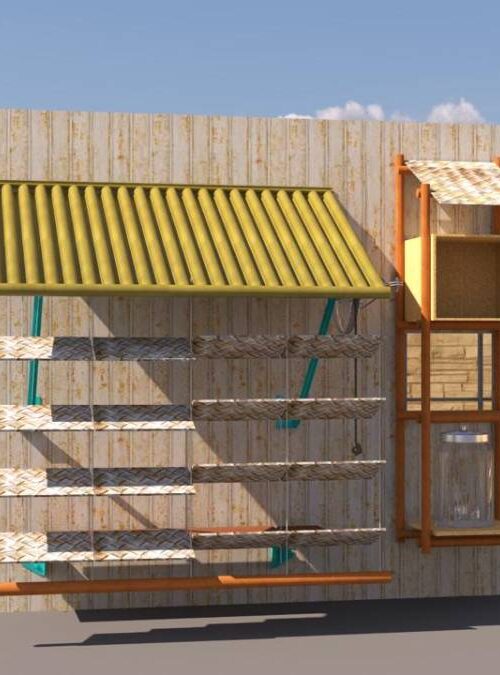
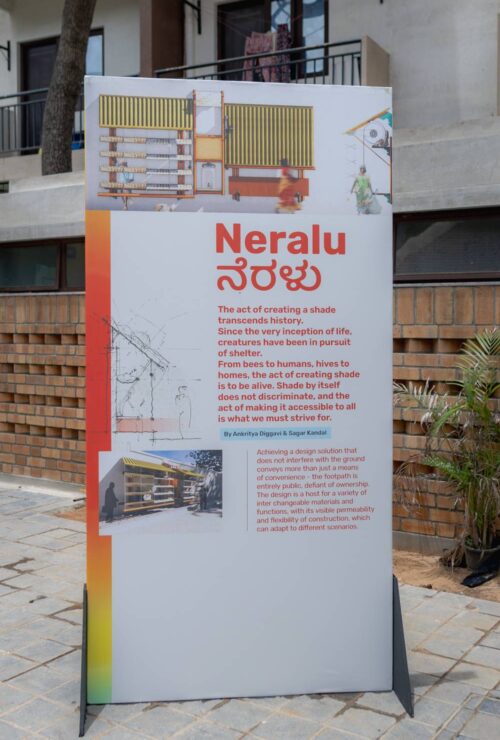
Neralu Heat Shelter
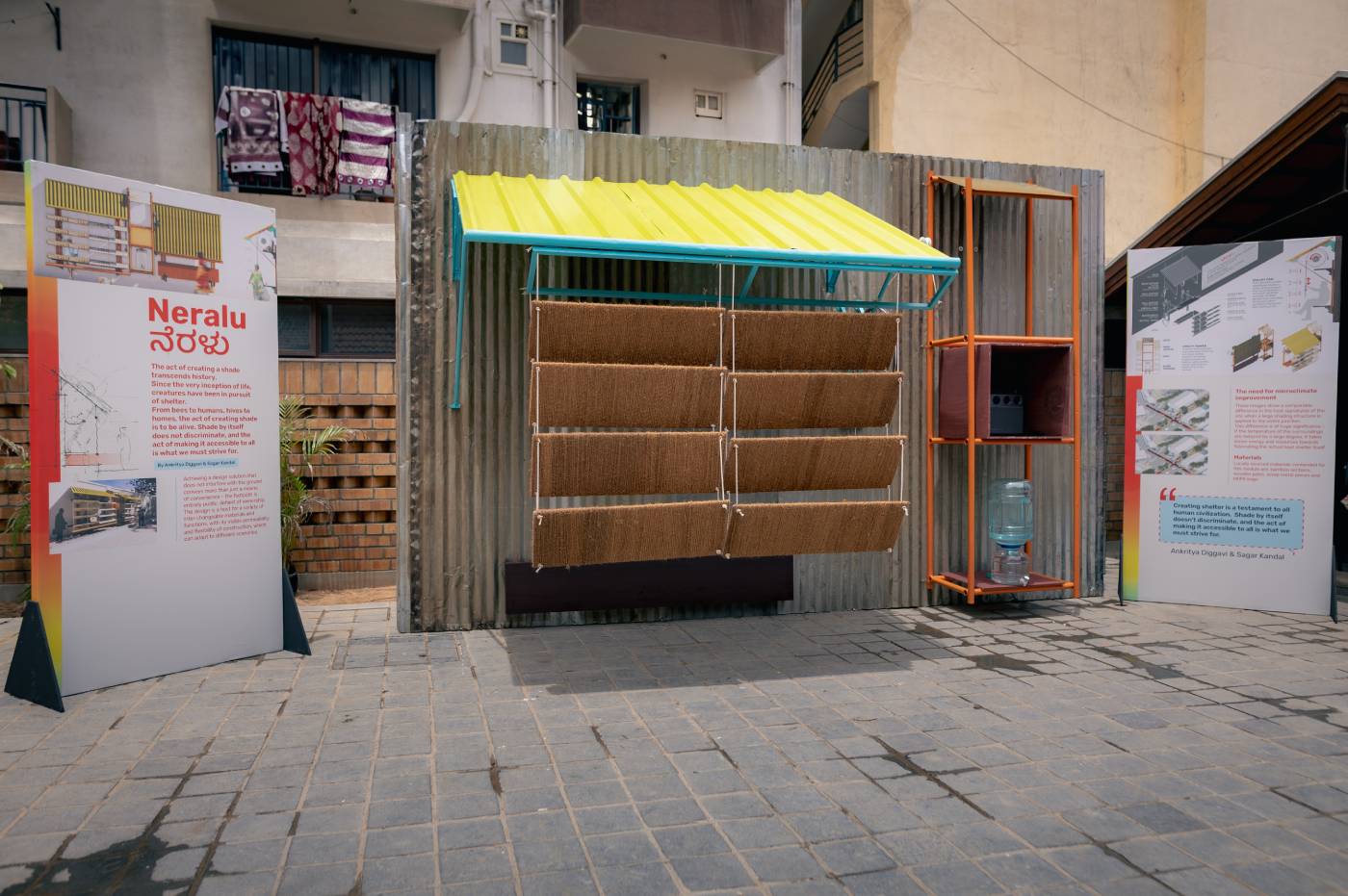
Material: Jute ropes, Old Bicycle, Stone Debris, Metal
Specifications: 7.5 feet x 9.8 feet
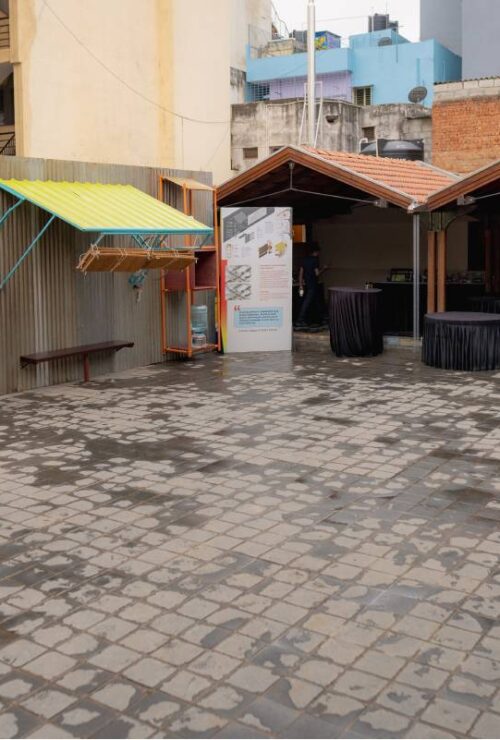
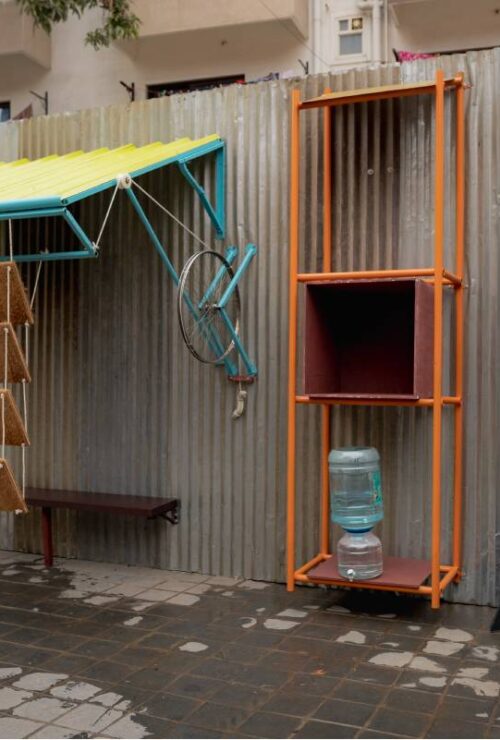
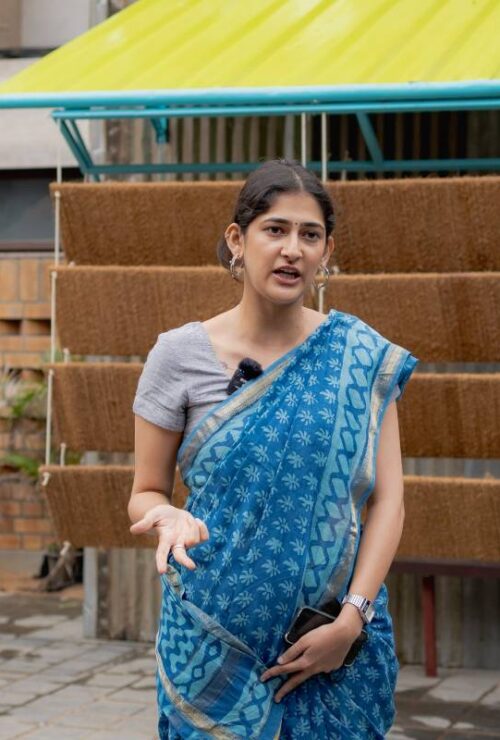
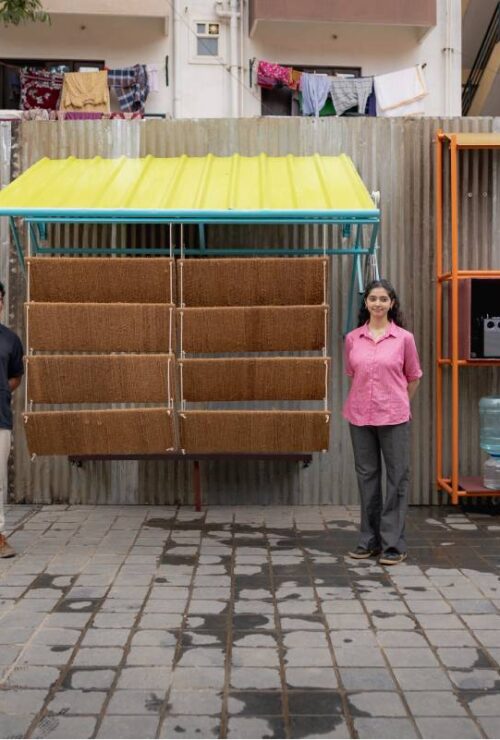
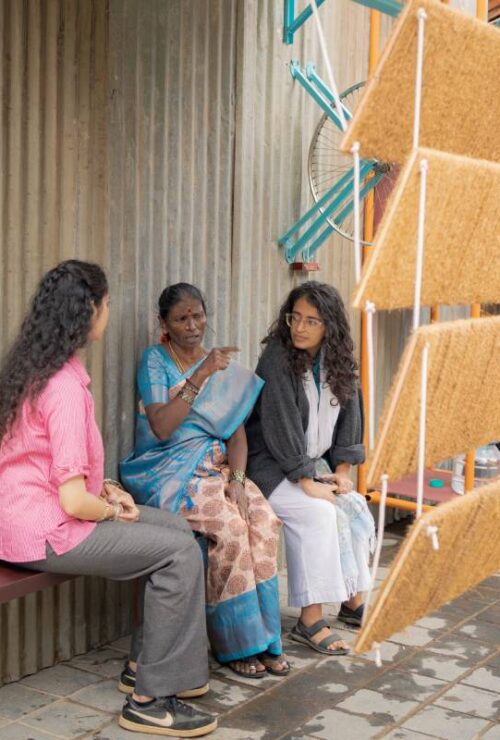
In 2025, Bengaluru was fortunate to receive rains earlier than expected, but there’s little reason to celebrate. The unpredictability of our weather is alarming, making our cities more vulnerable to extreme weather events like heat waves and floods. In fact, temperatures reached 36°C as early as February, making Bengaluru even hotter than Delhi. While we may not feel the heat today, the truth is that Bengaluru is heating up.
That’s why it’s crucial to talk about how heat stress impacts us, especially as it becomes a growing public health crisis for India’s informal workers. Our cities are home to vast numbers of workers and residents of informal settlements, exposed to intense sun and heat during work, only to return to stiflingly hot homes with little to no access to ventilated spaces or affordable cooling solutions.
We built the Neralu Heat Shelter as a part of the Sweat & Concrete 2025, an initiative of Purpose and People First Cities, which brought together citizens, designers and changemakers to showcase innovative, community-led, ground-up solutions for combating urban heat stress. The core question at hand: Can we outdesign urban heat?
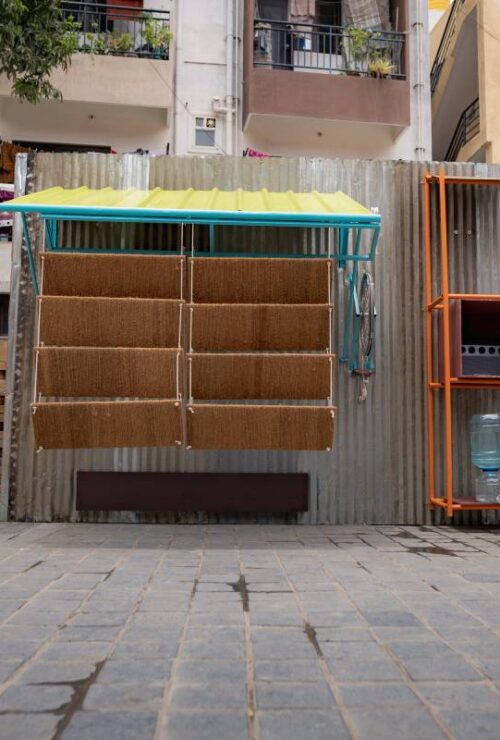
The event unveiled the Neralu Heat Shelter—a low-cost, collapsible, community-inspired prototype offering urgently needed relief from extreme heat. Designed by architects Sagar and Ankritya with locally available materials, we constructed this shelter that sparked real-time interaction with informal workers and local residents, who shared their feedback to further refine the design.